
-
UPVC DOOR

-
UPVC WINDOW
-
UPVC VENTILATORS


What Are the Pros & Cons of Casement Windows?
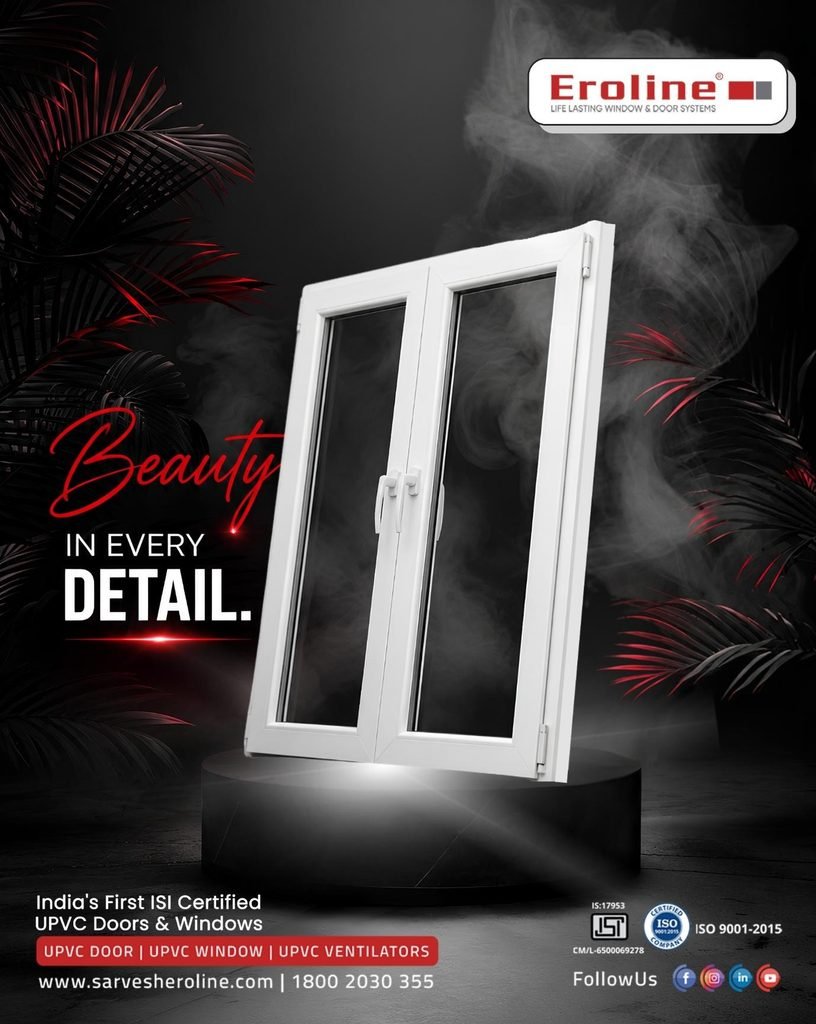
Choosing the right windows can make a significant difference to the comfort, appearance, ventilation and energy efficiency of your home. Among the different window styles available today, casement windows are a popular choice for modern homes, apartments, villas and offices.
Unlike sliding windows, casement windows are hinged at the side and open outward, allowing a larger opening for ventilation and airflow. They can also be combined with options such as double glazed windows to improve insulation, reduce outside noise and enhance indoor comfort.
But are casement windows the right choice for every home? They offer several advantages, but they also have a few limitations that homeowners should consider before making a purchase.
In this guide, we will explain what casement windows are, their pros and cons, how they compare with sliding windows, their suitability for Indian conditions, and the important factors to consider before buying them.
What Are the Pros and Cons of Casement Windows?
Casement windows offer excellent ventilation, wide openings, natural light, strong sealing, and good thermal and acoustic performance when properly configured. Their main disadvantages are that they require external space to open, hardware needs occasional maintenance, and open shutters can be affected by strong winds.
Are Casement Windows Good for Homes?
Yes, casement windows can be an excellent choice for homes when the window design and opening space are suitable.
Their side-hinged design allows the entire window opening to be used for ventilation. When the shutter is opened, it can help direct outdoor air into the room more effectively than some other window styles.
Modern casement windows can also provide a combination of:
- Excellent ventilation
- Good natural lighting
- Improved sealing
- Low maintenance
- Noise reduction
- Protection against dust and rain
- Energy efficiency
- Modern appearance
For homes in India, the choice of glass, profile quality, hardware and installation plays an important role in determining the overall performance of the window.
What Is a Casement Window?
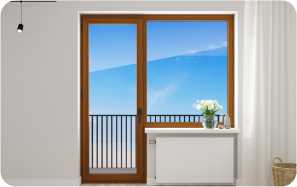
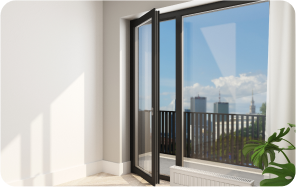
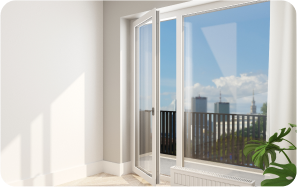
A casement window is a window that is attached to its frame using side hinges. The shutter opens outward, similar to the way a door opens.
Casement windows can be manufactured using different materials and configurations. Modern versions are particularly popular because uPVC is durable, requires relatively little maintenance and can provide effective insulation when properly designed and installed.
Casement Windows: Pros & Cons at a Glance
| Pros | Cons |
| Excellent ventilation | Need external opening space |
| Large clear opening | Not ideal near narrow walkways |
| Good natural light | Hardware requires maintenance |
| Strong sealing | Open shutters can be affected by wind |
| Can reduce dust/noise infiltration | May cost more than basic systems |
| Good insulation potential | Opening direction needs planning |
| Modern appearance | May face restrictions in some high-rise buildings |
How Casement Windows Open and Work
Casement windows are usually operated using a handle connected to a locking mechanism.
When the handle is turned, the locking points release and the shutter can be opened outward. Depending on the design, the window may use friction stays, hinges or other specialised hardware to control the opening.
When closed, the shutter sits tightly against the frame. Proper sealing between the frame and shutter can help reduce air leakage, dust infiltration and outside noise.
The opening direction should be planned carefully so that the shutter does not interfere with balconies, walkways, furniture or other structures.
Where Casement Windows Are Commonly Installed
Casement windows can be used in many areas of a building, including:
- Bedrooms
- Living rooms
- Kitchens
- Dining areas
- Balconies
- Villas
- Independent houses
- Apartments
- Offices
- Commercial buildings
| Area | Why Casement Windows Can Work |
| Bedroom | Ventilation + noise control with suitable glazing |
| Living Room | Natural light + ventilation |
| Kitchen Improved | airflow |
| Villa | Flexible opening sizes and configurations |
| Apartment | Ventilation where exterior clearance permits |
| Office | Natural light + acoustic performance |
| Road-Facing Room | Strong sealing + suitable acoustic glazing |
| Rain-Prone Area | Effective sealing/drainage when properly installed |
They are particularly useful in spaces where good ventilation and a larger unobstructed opening are important.
Common Materials Used in Casement Windows
Casement windows are available in materials such as:
- uPVC
- Aluminium
- Wood
Among these, uPVC is widely considered for residential applications because it combines durability, insulation and relatively low maintenance.
The performance of a window, however, depends not only on the material but also on the profile design, reinforcement, hardware, glass specification, fabrication quality and installation.
Advantages and Disadvantages of Casement Windows
Advantages of Casement Windows
Casement windows offer several benefits that make them suitable for modern residential and commercial buildings.
Better Ventilation and Airflow
One of the biggest advantages of a casement window is its ability to provide a wide opening.
Because the shutter opens outward, a larger portion of the window can be opened compared with some sliding configurations. This can improve natural airflow and ventilation inside the room.
For homes that depend on natural ventilation, strategically positioned casement windows can help create better air movement.
More Natural Light for Indoor Spaces
Casement windows can be designed with larger glass areas, allowing plenty of daylight to enter the room.
Good natural lighting can make interiors feel brighter and more spacious while reducing the need for artificial lighting during the daytime.
The size, glass type and window configuration should be selected according to the room’s orientation and lighting requirements.

Strong Sealing Against Dust and Noise
When a casement window is closed properly, the shutter presses against the frame and sealing system.
This can create a tighter closure compared with certain traditional window designs.
A properly designed and installed casement window can help reduce the entry of:
- Dust
- Outdoor air
- Noise
- Moisture
For homes located near busy roads or urban areas, combining good-quality profiles with suitable glass can further improve acoustic comfort.
Better Rain and Wind Protection
Indian homes may experience strong sunlight, heavy rain and seasonal winds depending on the location.
A well-designed casement window with appropriate seals and drainage can help prevent water and air infiltration when the window is closed.
However, performance depends heavily on correct fabrication, drainage design, installation and maintenance.
During heavy rain or strong winds, windows should generally remain closed to avoid unnecessary stress on the hardware and shutters.
Improved Energy Efficiency
Windows have an important role in the thermal performance of a building.
Poorly sealed windows can allow unwanted heat transfer and air leakage. Casement windows with good-quality frames, effective seals and suitable glazing can help improve the overall insulation of a room.
For additional thermal and acoustic performance, homeowners can consider double glazed windows.
Double glazing uses two panes of glass separated by a sealed insulating space. Depending on the complete window system, this can help reduce heat transfer and outside noise.
Disadvantages of Casement Windows
Although casement windows offer many benefits, they are not suitable for every situation. Understanding their limitations can help you make a better decision.
Requires Space to Open
The main limitation of a casement window is that the shutter opens outward.
This means sufficient external space is required for the shutter to operate safely.
Casement windows may require additional planning in areas such as:
- Narrow balconies
- Walkways
- Small external passages
- Windows close to neighbouring structures
- Areas with external obstructions
Before installation, check the opening direction and available clearance.
Hardware Maintenance May Be Needed
Casement windows use hinges, handles, locking mechanisms and other hardware to operate the shutter.
Over time, these components may require cleaning, adjustment or replacement depending on usage and environmental conditions.
Regular inspection can help identify loose handles, damaged seals or alignment issues before they become bigger problems.
Strong Wind Can Affect Open Shutters
Because casement windows open outward, strong wind can place additional pressure on an open shutter.
Opening a casement window during very strong winds may put stress on hinges and operating hardware.
Using appropriate hardware and avoiding unnecessary operation during extreme weather can help protect the window system.
Who Should Choose Casement Windows?
Casement windows are particularly suitable for homeowners who prioritise:
- Maximum natural ventilation
- Larger clear window openings
- Stronger sealing against outdoor conditions
- Natural daylight
- Thermal and acoustic comfort
- Modern window designs
They may be less suitable where there is very limited exterior clearance, narrow balconies, busy walkways, or restrictions on outward-opening windows.
Cost May Be Higher Than Basic Window Types
The casement window price can vary depending on several factors, including:
- Profile material
- Window size
- Glass specification
- Single or double glazing
- Hardware
- Number of opening shutters
- Colour and finish
- Installation requirements
- Brand and profile quality
A basic casement configuration may cost less than a premium system with upgraded hardware and double glazing.
Therefore, homeowners should compare complete window specifications rather than comparing price alone.
Casement Windows vs Sliding Windows
Both casement and sliding windows are popular choices, but their designs and performance characteristics are different.
| Feature | Casement Windows | Sliding Windows |
|---|---|---|
| Opening method | Hinged and opens outward | Slides horizontally |
| Ventilation | Generally excellent | Good |
| Opening area | Can provide a larger clear opening | Limited by sliding configuration |
| External space | Requires clearance | Requires less external clearance |
| Sealing | Generally provides a tight closure | Depends on design and system |
| Operation | Handle-operated | Sliding operation |
| Maintenance | Hardware needs periodic attention | Tracks may require cleaning |
| Suitable for | Homes, villas, offices | Apartments, compact spaces, balconies |
| Appearance | Modern and versatile | Simple and practical |
Neither option is universally better. The right choice depends on ventilation requirements, available space, building design, budget and personal preference.
Casement or Sliding Windows: Which Should You Choose?
Choose casement windows when ventilation, a larger clear opening, and tighter sealing are priorities. Choose sliding windows when external opening space is limited or when you need a compact window system. The best option depends on the room, available space, climate, budget, and performance requirements.
Are Casement Windows Suitable for Indian Homes?
Casement windows can be a practical choice for many Indian homes.
India has diverse climatic conditions, from hot and dusty regions to areas experiencing heavy monsoon rainfall. Therefore, window selection should consider the local environment.
A properly designed casement windows for Indian homes can provide useful benefits such as ventilation, sealing, insulation and low maintenance.

Casement Windows for Apartments
Casement windows can work well in apartments where homeowners want better ventilation and a modern appearance.
However, the external opening should be checked carefully, especially in high-rise buildings and balconies.
Building regulations, safety requirements and restrictions from the apartment association should also be considered.
Casement Windows for Villas
Villas generally offer more flexibility in terms of window size and opening configuration.
Casement windows can be used to create larger glazed openings while providing good ventilation.
They can also be combined with fixed windows, sliding systems or other configurations to create customized designs.
Casement Windows for Offices
Casement windows can also be used in offices where natural ventilation and daylight are important.
For offices located near roads or busy commercial areas, suitable glazing can help improve indoor acoustic comfort.
Casement Windows for Homes in Bangalore, Hyderabad, Chennai, Delhi & Tamil Nadu
Casement windows can be suitable for homes across Bangalore, Hyderabad, Chennai, Delhi, and other parts of Tamil Nadu, but the window specification should be selected according to local weather conditions, building design, and exposure.
For homes in Bangalore, casement windows can provide good ventilation while suitable sealing and glazing can help manage traffic noise and seasonal rainfall. In Hyderabad and Delhi, effective seals and appropriate glazing can be useful where heat, dust, and outdoor noise are concerns. In Chennai and other parts of Tamil Nadu, proper drainage, sealing, hardware, and installation become particularly important in locations affected by humidity and seasonal rainfall.
Regardless of the city, homeowners should consider window orientation, external opening space, glazing, drainage, seals, hardware, and installation quality before choosing a casement window.
Casement Windows for Hot, Dusty and Rainy Locations
For Indian locations with high levels of heat, dust or seasonal rainfall, window sealing becomes particularly important.
A good window system should have:
- Properly designed drainage
- Quality seals
- Strong locking points
- Suitable glazing
- Correct installation
- Durable hardware
The right combination can help improve protection against outdoor environmental conditions.
What Affects Casement Window Price in India?
Casement window price in India can vary based on window size, uPVC profile specification, glass type, single or double glazing, hardware, number of opening shutters, colour, finish, installation, and manufacturer. Buyers should compare complete window specifications rather than selecting a window based only on the lowest quoted price.
Things to Check Before Buying Casement Windows
Before purchasing a casement window in India, don’t focus only on the price. Consider the complete window system.
1. Profile Quality
Check the profile construction, wall thickness, reinforcement requirements and overall manufacturing quality.
2. Glass Type
Choose the glass based on your requirements.
Options can include single glazing and double glazed windows, depending on the required thermal and acoustic performance.
3. Hardware
Good-quality hinges, handles and locking mechanisms are important for smooth operation and long-term performance.
4. Sealing System
Check the quality and configuration of the seals used around the window.
5. Drainage
Proper drainage is particularly important in regions that receive heavy rainfall.
6. Installation Quality
Even a high-quality window can perform poorly if it is incorrectly installed.
Make sure the installer follows appropriate installation practices and ensures proper alignment and sealing.
7. Window Size and Opening Direction
Confirm that the shutter has enough space to open without hitting walls, railings, furniture or other structures.
8. Warranty and After-Sales Support
Always check the warranty provided for profiles, glass, hardware and installation.
Reliable after-sales service can be valuable if adjustment or maintenance is required in the future.
9. Compare Complete Specifications
When comparing the casement window price, compare products based on the same specifications.
For example, don’t compare a basic single-glazed window with a premium double-glazed system simply based on the quoted price.
Common Mistakes When Buying Casement Windows
Avoid:
- Choosing based only on price
- Ignoring exterior opening clearance
- Selecting unsuitable glass
- Overlooking seal quality
- Ignoring drainage requirements
- Choosing low-quality hardware
- Not considering wind exposure
- Ignoring installation quality
- Not checking warranty
- Comparing windows with different specifications
Should You Choose Double-Glazed Casement Windows?
Double-glazed casement windows can be considered when thermal insulation and outside noise reduction are important. They may be particularly useful for homes near busy roads, commercial areas, or locations with significant heat exposure.
However, overall performance depends on the glass specification, frame system, seals, fabrication, and installation quality.
Why Choose Sarvesh for Casement Windows?
Choosing the right profile manufacturer is an important part of selecting a reliable window system.
Sarvesh Eroline provides uPVC profile systems for casement windows used in residential and commercial applications in India. Casement window configurations can be selected according to requirements such as ventilation, opening size, glazing, sealing, thermal insulation, noise reduction, and architectural design.
It offers uPVC profile solutions designed for modern residential and commercial applications. Eroline focuses on uPVC profiles that combine practical performance with contemporary window designs.
The right casement window system can help provide:
- Good ventilation
- Modern aesthetics
- Effective sealing
- Low-maintenance performance
- Noise reduction
- Thermal insulation
- Multiple design possibilities
For projects where performance, appearance and long-term usability are important, choosing a quality profile system and experienced fabricator can make a significant difference.
When selecting your casement windows, consider your location, building type, ventilation requirements, glass specification, opening size and budget before making the final decision.
Final Thoughts: Are Casement Windows Worth It?
So, are casement windows worth choosing?
For many homes and buildings, yes.
Casement windows offer excellent ventilation, a large clear opening, good sealing and a modern appearance. They can be particularly useful for homeowners who prioritise airflow, natural light and indoor comfort.
However, they do require sufficient external space for the shutter to open, and their hardware may need periodic maintenance. The initial cost can also be higher than some basic window configurations.
Ultimately, the best window depends on your building design, climate, available space and performance requirements.
If you are comparing a casement window in India, look beyond the initial casement window price and evaluate the complete system—including profile quality, glass, hardware, sealing, installation and after-sales support.
Frequently Asked Questions
What are the main benefits of casement windows?
The main benefits include excellent ventilation, a wide opening, good natural lighting, effective sealing, modern appearance and the potential for improved thermal and acoustic performance when combined with suitable glazing.
Where should casement windows be installed?
Casement windows can be installed in bedrooms, living rooms, kitchens, villas, apartments, offices and other spaces where ventilation and natural light are important. The available external space should be checked before installation.
Are casement windows low-maintenance?
Yes. casement windows generally require less routine maintenance than traditional wooden windows. However, hardware such as handles, hinges and locking mechanisms should still be inspected and maintained periodically.
Are casement windows better than sliding windows?
It depends on your requirements. Casement windows can provide excellent ventilation and a larger clear opening, while sliding windows are useful where external opening space is limited. Consider ventilation, available space, design and budget before choosing.
What are the disadvantages of casement windows?
The main disadvantages are that they require external space to open, their hardware may need periodic maintenance, strong winds can affect open shutters, and premium configurations may have a higher initial cost than basic window systems.
Trending Blogs
-
#1. How to Select uPVC Doors and Windows for Offices and Commercial Buildings
-
#2. Best uPVC Windows in Hyderabad for Heat and Dust Protection
-
#3. How uPVC Windows Protect Homes During the Monsoon
-
#4. Which uPVC Door Is Best for Apartments and Modern Homes Today
-
#5. Why Are uPVC Windows the Best Choice for Modern Villa Homes?
-
#6. uPVC vs Aluminium Windows: Which Is Better for Your Home?
-
#7. Why Are uPVC Casement Windows Best for Modern Homes Today
-
#8. Which Are the Best Sliding Windows and Foldable Doors Now
-
#9. What Is the Price of uPVC Windows Per Sq Ft for Homes Now
-
#10. How Much Do Double Glazed Windows Cost for Modern Homes
Latest Blogs